

A hundred people on this island now know how to turn a melon rind into vinegar. That is not a joke, and it is not a niche hobby — it is the measurable output of a food waste programme that Ibiza & Formentera Preservation has been quietly running since late 2025, and which wrapped up its latest edition this week. Reducing food waste in Ibiza is one of those problems that sounds like it belongs to supermarkets and hotel kitchens, and mostly does. But the environmental foundation's bet has been that it also belongs to anybody standing in front of a fridge with half a watermelon and no plan.
The project is called Activistas Gastronómicos Residuo Cero — Zero Waste Gastronomic Activists — and it has been funded by a grant from the environmental management department of the Consell Insular d'Eivissa. Across seven workshops it has trained exactly 100 people: home cooks, working chefs, and culinary students.
Seven workshops, one idea
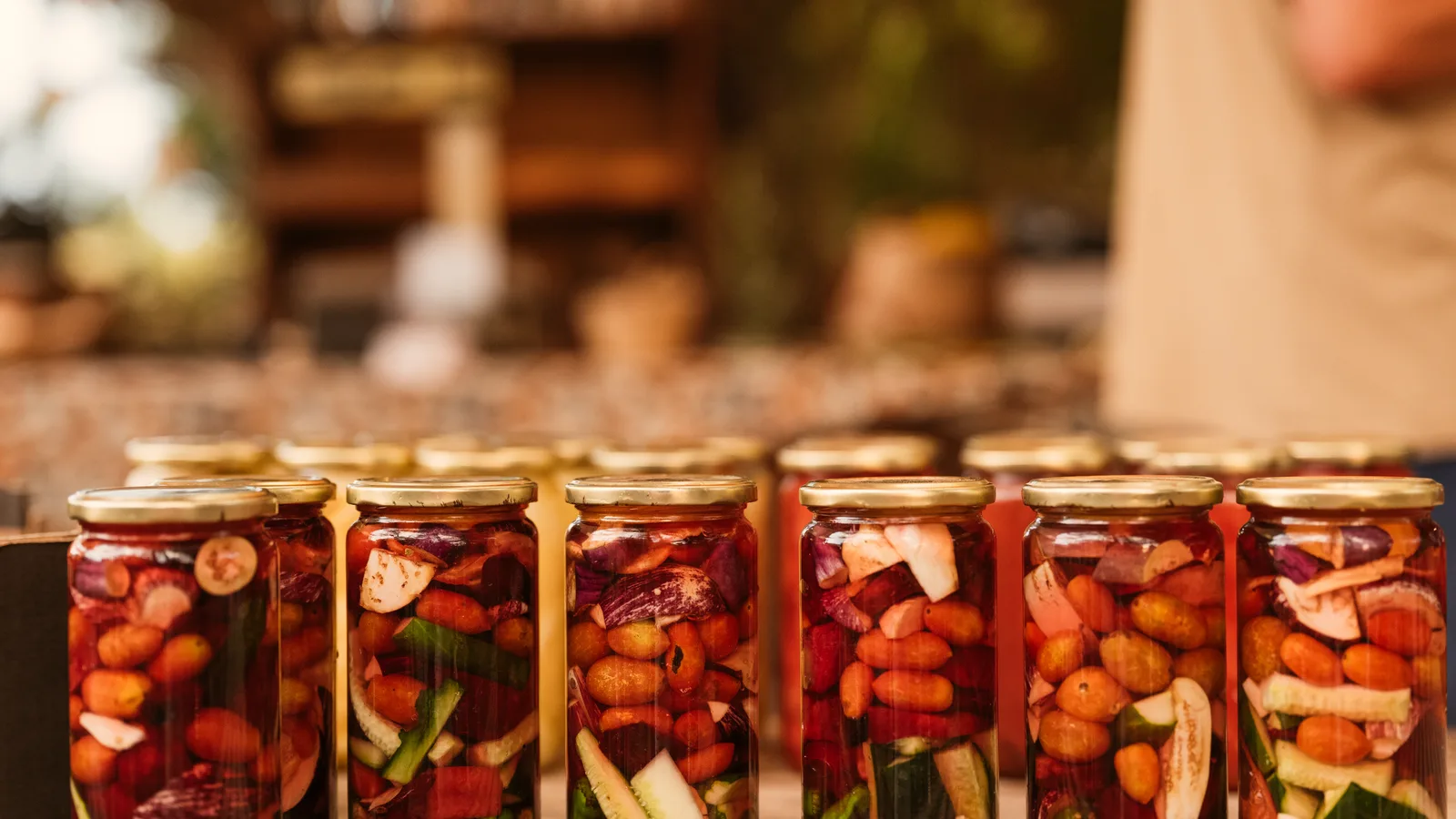
The techniques taught are old ones: fermenting, pickling, bottling preserves, and using the parts of a vegetable that normally go in the bin. Every recipe across the programme was made with local, seasonal produce — whatever happened to be available on the day.
"Reducing food waste isn't only about managing waste better, it's about stopping it being generated in the first place," says Jordi Salewski, who coordinates the Circular Economy programme at Ibiza & Formentera Preservation. "Using up surpluses and recovering preservation techniques lets you act at the source and, at the same time, put a proper value on local produce."
The last session: melon vinegar at Can Puvil
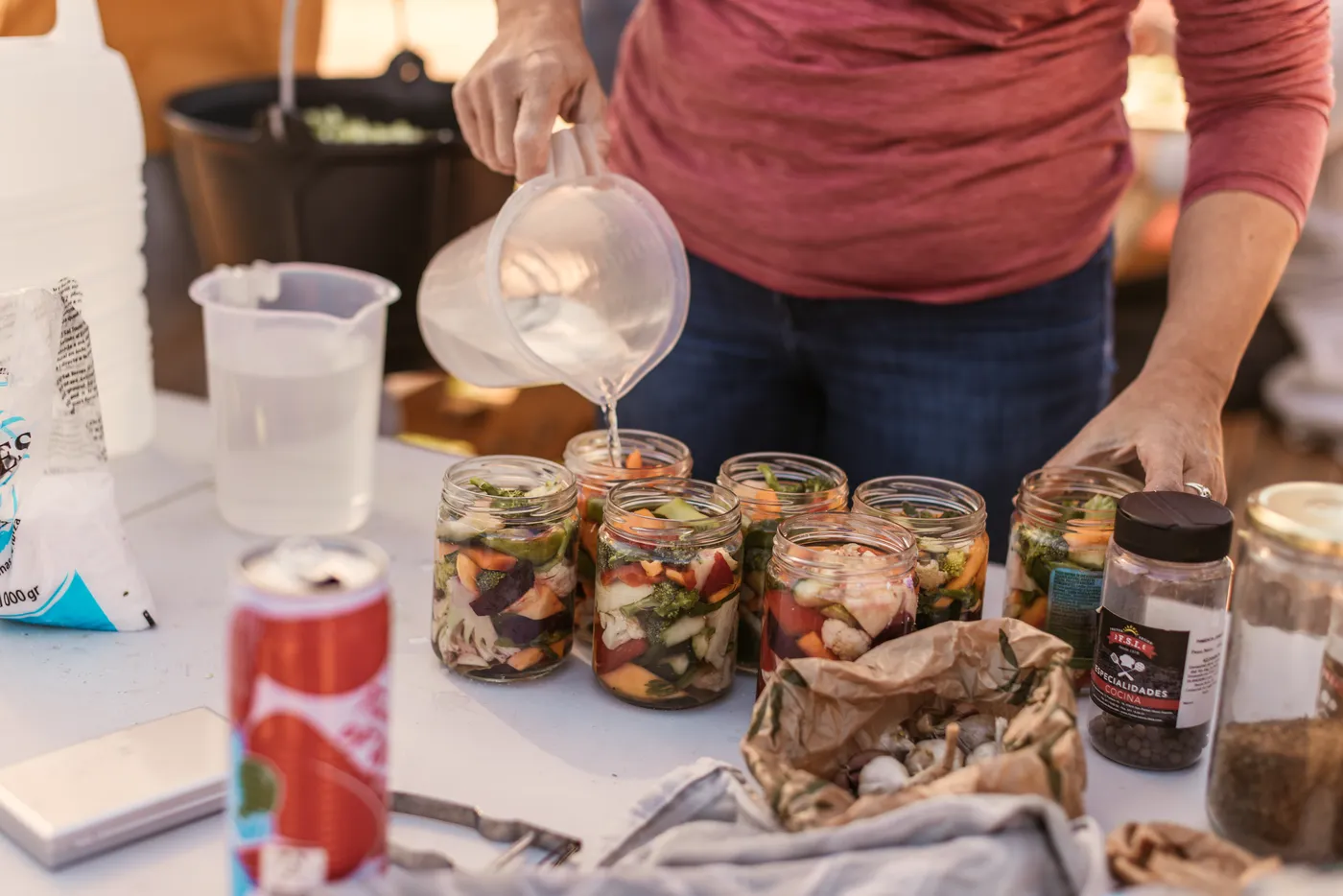
The final workshop of this edition took place yesterday at Can Puvil, where 13 people spent a session on preserving the summer garden. Led by chef Erika Tangari, participants made melon vinegar, watermelon vinegar, and salt brines — straightforward water-and-salt fermentation — of cucumber, aubergine, padrón peppers and small tomatoes.
If that list reads like a snapshot of an Ibizan August, that is the point. The programme deliberately worked with what the island's fincas and markets actually had in that week, rather than with a fixed syllabus of ingredients flown in to match a recipe.
From home kitchens to markets and fincas
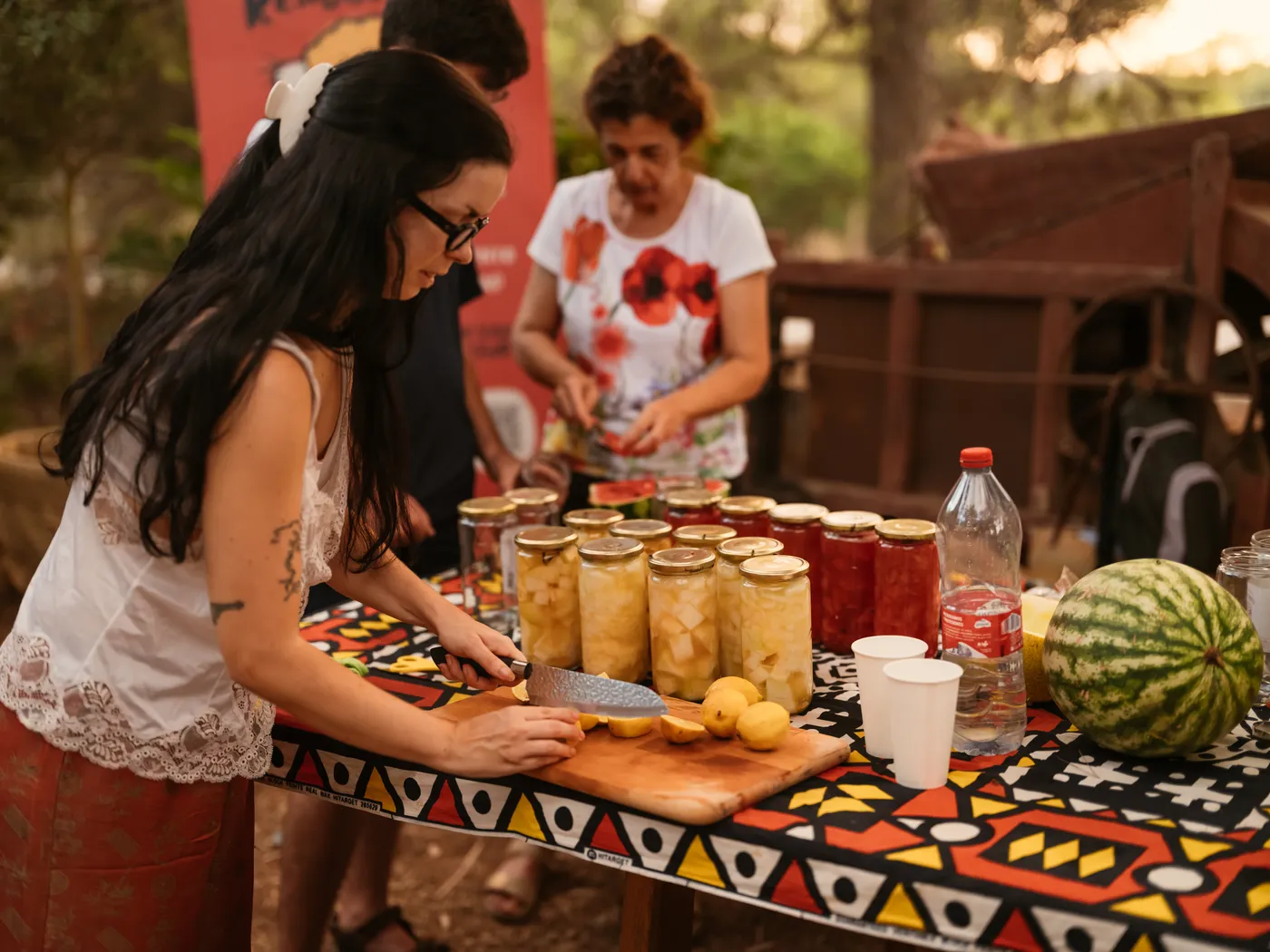
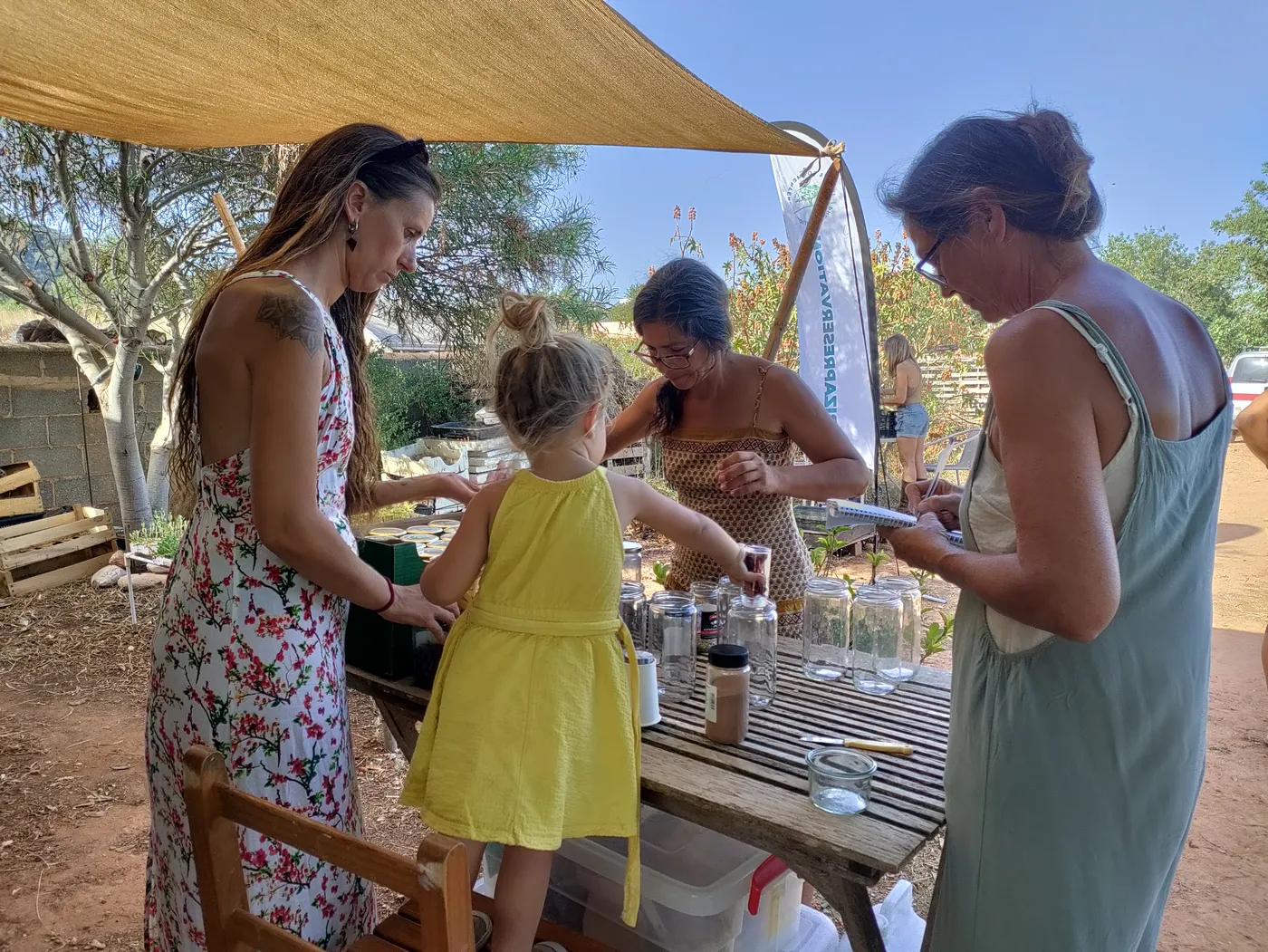
The sessions aimed at the general public brought together 75 people across five workshops, held at places tied to local production: Can Cristòfol, the Mercat de Forada, Es Corondà, El Camino and Can Puvil.
Over the course of the edition, participants made onion and courgette preserves, fermented vegetables, cabbage sauerkraut, pickles, strawberry vinegar, tomato chutney, basil pesto, jalapeño compote — and sweets made from watermelon rind. That last one tends to be the moment where people stop taking notes politely and start actually paying attention.
Twelve chefs, four afternoons
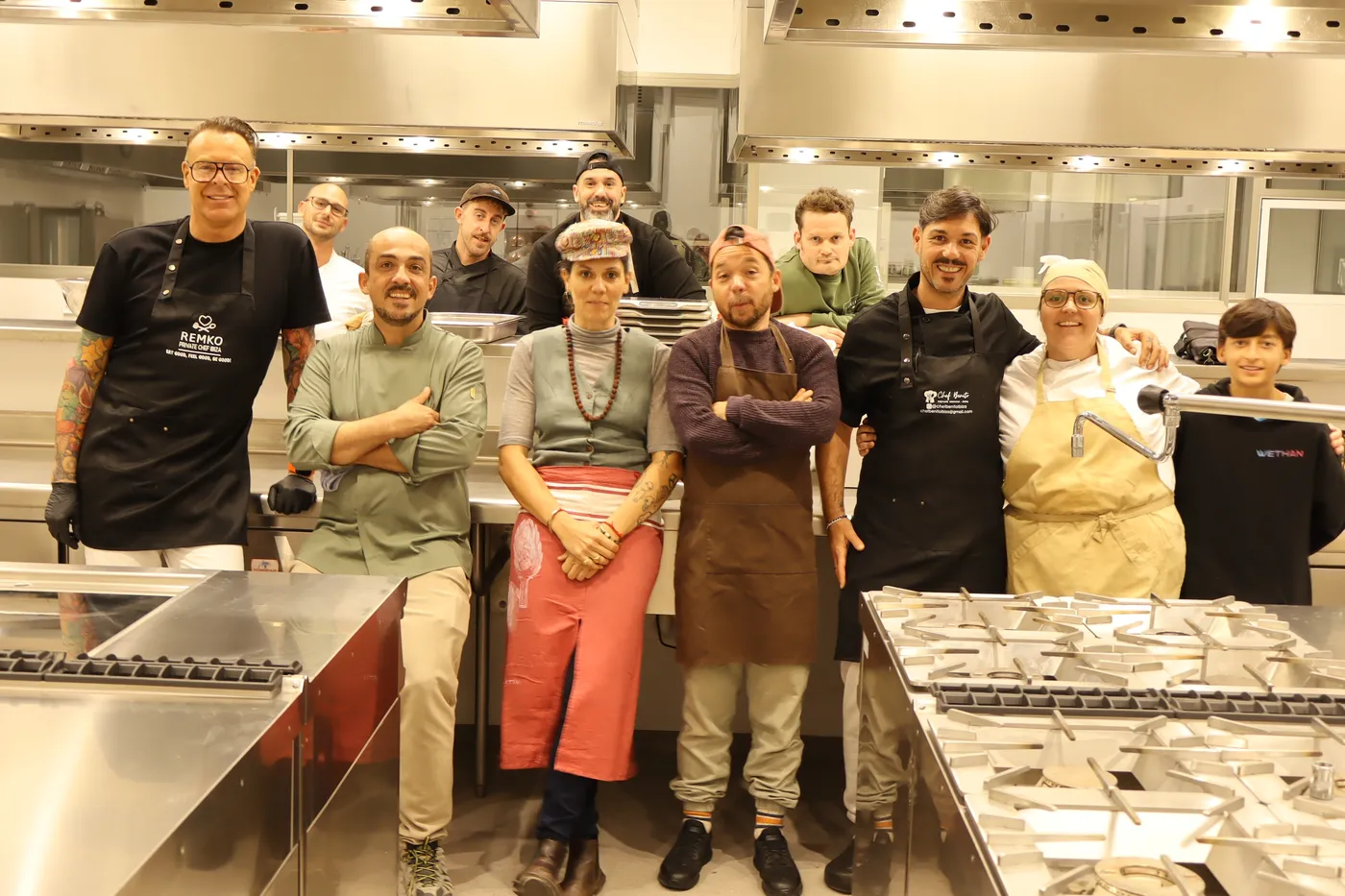
The programme also took the approach into professional kitchens. Twelve chefs spent four afternoons last December in intensive training at the Escuela de Hostelería de las Illes Balears in Ibiza, combining theory and practice: sustainability, buying and storing raw materials, local produce, and cutting food waste in hotels and restaurants. Alongside the Consell Insular d'Eivissa's support, that particular course was backed by a grant from the Balearic government's Conselleria d'Agricultura, Pesca i Medi Natural.
One of the core ideas was to invert the normal starting point of a kitchen. Instead of choosing a recipe and then sourcing its ingredients, you begin with the produce in front of you and ask what can be done with it.
"The idea is to look first at what we have and, from there, decide what we can make with it," Salewski explains. "That shift in approach means you use the produce better, and it opens up a lot of possibilities in the kitchen."
A gourmet lunch, no electricity, no fridge
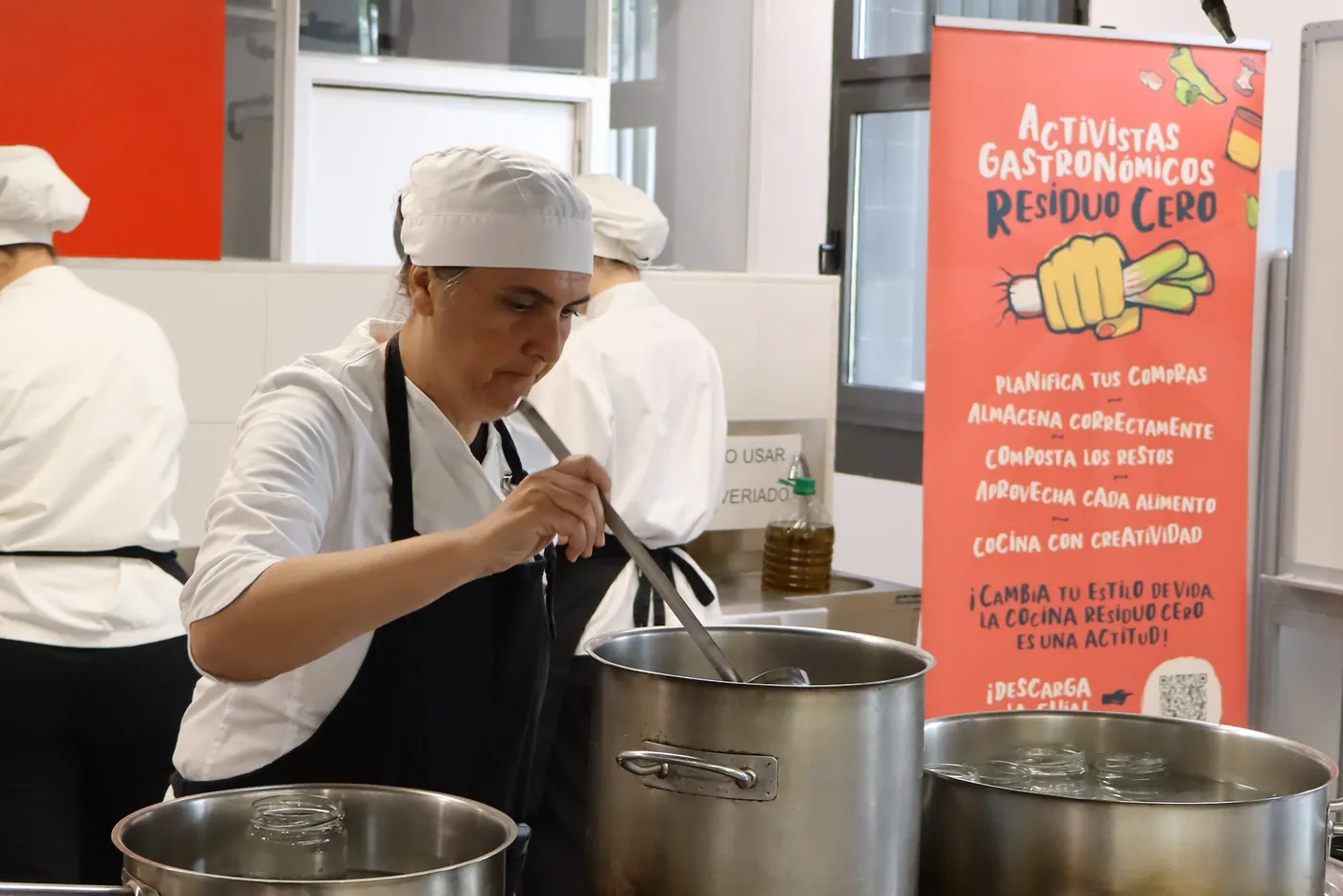
The foundation also went after the next generation. In April, 13 students on the Higher Diploma in Kitchen Management at IES Isidor Macabich took part in a morning of zero-waste cooking training at their own school.
The brief was deliberately awkward: prepare a sustainable gourmet lunch using only produce that was destined to be thrown away, with no electricity and no refrigeration. That forced the students into natural preservation techniques and into getting the most out of local ingredients — which is, of course, exactly how island kitchens worked before there were fridges in them.
"The aim is for waste prevention not to be understood as an add-on practice, but as part of how you organise and work in a kitchen," Salewski concludes.
Four things you can steal from the course
You do not need to have attended to use any of this.
- Brine is the easy entry point. Water and salt, vegetables submerged, room temperature. Cucumber, padrón peppers and small tomatoes all work, and you need no special equipment.
- Fruit that has gone slightly soft makes good vinegar. Melon, watermelon and strawberries were all used in the programme. Overripe is a feature, not a fault.
- Rinds and stalks are ingredients. Watermelon rind became sweets; the parts of a vegetable most people discard were treated as the starting material rather than the leftovers.
- Shop backwards. Buy what is local and in season, then decide what to cook. Working the other way round is what generates most of the waste in a domestic kitchen.
Ibiza & Formentera Preservation runs the Circular Economy programme alongside its work on water, land and sea. Details of future editions are published on ibizapreservation.org, and the programme coordinator can be reached at jordi@ibizapreservation.org.
Photos courtesy of Ibiza & Formentera Preservation.
Looking for more of what's happening across the island? Browse markets, workshops, live music and village fiestas on the Ibiza Calendar, updated daily.