Winter is the best season for hiking in Ibiza, and most visitors never find out. Once the summer crowds leave, the island's paths go quiet, the air is cool enough to walk at midday, and the pine forests smell of resin and rosemary after the first autumn rains. The light is low and golden, the sea is that deep winter blue, and on a clear day you can see Formentera floating on the horizon from almost any high point.
This guide gathers four of our favourite routes for hiking in Ibiza in winter, from the island's highest summit to hidden fishermen's coves, plus the practical tips we wish someone had told us on our first winter walks here.
Sa Talaia: hiking to Ibiza's highest point
At around 475 metres, Sa Talaia is the roof of Ibiza, and it rises right behind the village of Sant Josep de sa Talaia, which takes its name from the mountain. The classic way up starts in the village itself: from the whitewashed church, signed paths climb through terraces of almond and carob trees before entering a thick pine forest that keeps you in shade most of the way.
It is a steady climb rather than a technical one, and most walkers of average fitness reach the top comfortably, stopping often for the view. The summit itself carries a cluster of antennas, so it is not the prettiest spot on the island, but the panorama on the way up and from the clearings near the top more than makes up for it: the salt flats of Ses Salines, the airport, the long curve of the south coast and, on a crisp day, the whole of Formentera.
Make a morning of it and finish in Sant Josep, where the bars around the church square stay open all winter. A coffee and a slice of flaó on the terrace is the island's best post-hike ritual.
Torre des Savinar and the Es Vedrà cliffs
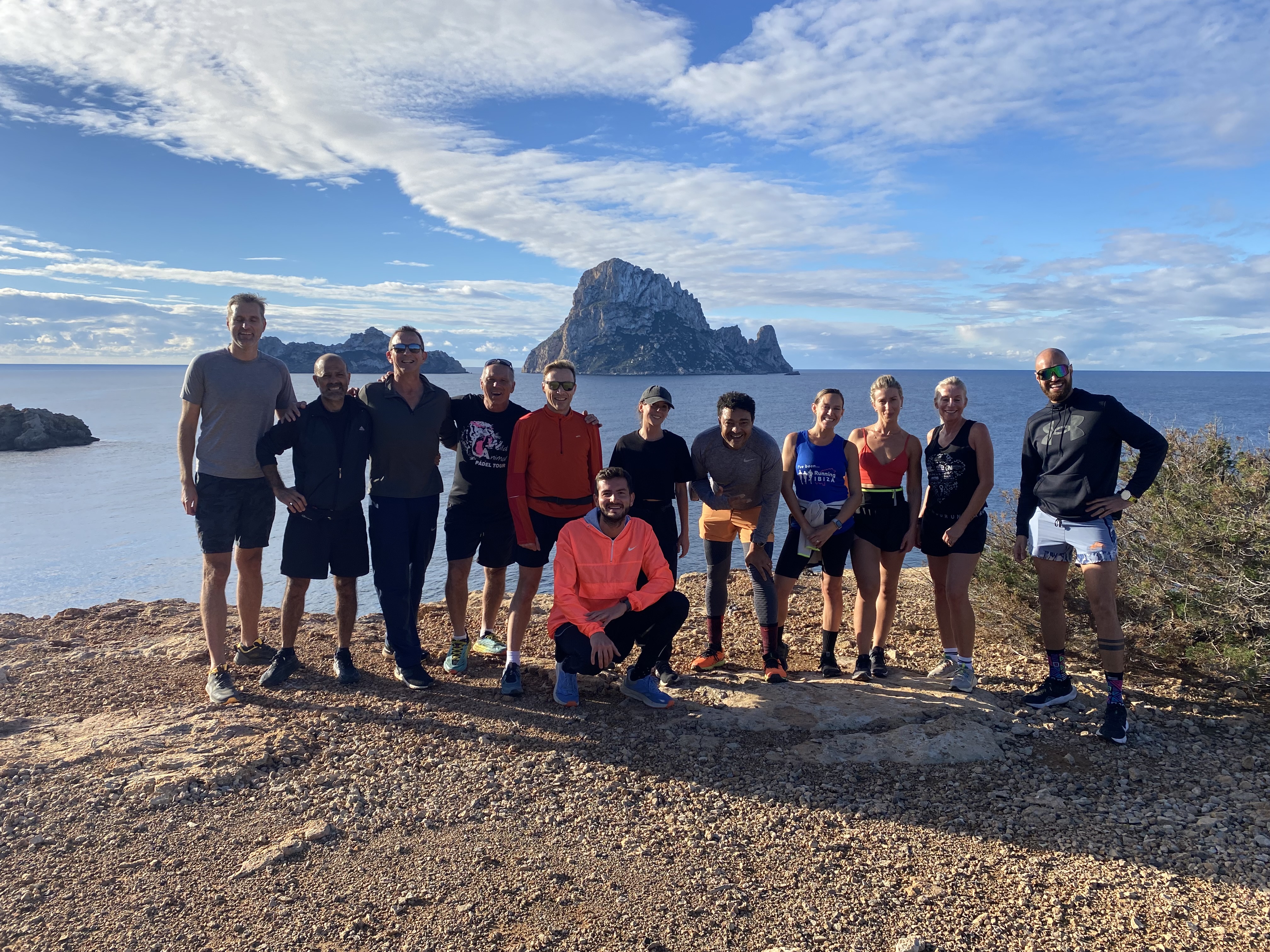
If you only do one walk in Ibiza, make it this one. The Torre des Savinar is an old defensive watchtower perched on the cliffs of the south-west coast, built to watch for pirate ships, and it looks straight across at the rock of Es Vedrà and its little sister, Es Vedranell. The area sits inside the protected natural area of Cala d'Hort, Cap Llentrisca and Sa Rota.
The usual approach starts from the signed parking area on the road above Cala d'Hort, following a dirt track through juniper and pine to the tower. It is short and gentle, which makes it a perfect late-afternoon walk: arrive an hour before sunset and watch the light turn Es Vedrà gold, then pink, then violet.
You will probably notice paths dropping down towards the old sandstone quarry below the tower, often nicknamed "Atlantis". The descent is steep, unmarked in places and slippery after rain, and the quarry is part of a protected area. In winter, with shorter days and damp rock, we recommend enjoying it from above. The view from the tower is the real prize anyway.
Our cover photo was taken on exactly this stretch of coast during one of the island's weekly social trail runs. If you prefer to explore with company, the Group Social Trail Run meets on Wednesday 2 December at 09:00 at a different spot each week, at a relaxed pace for all levels, with a €4 participation fee and no advance registration.
Es Amunts: the wild north coast
The north of Ibiza is another island altogether. The Es Amunts area, stretching across the north-west between Sant Antoni, Sant Miquel and Sant Joan, is protected for its cliffs, forests and traditional farmland, and it holds the most dramatic coastal hiking on the island.
The best-loved route here leads down to Es Portitxol, a tiny horseshoe-shaped cove ringed by red cliffs and lined with wooden fishermen's huts. The path starts above the bay of Sant Miquel and drops steeply through pine forest to the sea. Going down is easy; coming back up is a proper workout, so keep something in the tank and allow plenty of time.
Further along the coast, the cliffs around Cala d'Albarca are just as spectacular, with a natural rock arch at the foot of the cliffs and almost nobody around in winter. Paths in Es Amunts are rougher and less signed than in the south, so download your route before you set off: mobile coverage can drop out in the valleys.
Coastal walks near Sant Antoni: Cala Salada and beyond
For something easier, the coast north of Sant Antoni offers short, rewarding walks with clear paths. From the bay of Cala Salada and Cala Saladeta, a path climbs over the headland through pine and rock with views back over the turquoise water, which looks even more vivid on a sunny winter morning. Continue along the cliff tops for as far as you feel like going and turn back when you have had your fill: there is no need to complete a loop.
These walks are ideal for families or for a gentle half-day, and the bay is a wonderful picnic spot in the off-season, when you may have it almost to yourself. If you fancy a winter dip afterwards, the water usually feels colder in late winter than in November, when the sea still holds some of the summer's warmth.
Practical tips for hiking in Ibiza in winter
Watch the clock. In late November and December, the sun sets at around half past five in the afternoon, and it gets dark fast in the forest. Start in the morning and plan to be back on the road before dusk.
Check the forecast and the paths. Winter storms are short but can be heavy, and the red clay of Ibiza turns very slippery after rain. Give trails a day to dry if you can.
Wear proper shoes. Many paths are loose stone and limestone. Trainers with a good grip are fine for the shorter walks; for Es Amunts, hiking shoes are better.
Carry water and a layer. Even in winter the sun is strong on exposed headlands, but the wind on the cliff tops can be cold. Pack water, a windproof layer and a snack, as most coastal beach bars are closed until spring.
Respect the countryside. Many paths cross private farmland. Close gates behind you, keep dogs on a lead near livestock and stick to existing paths in the protected areas.
Find official information. The island's tourism board publishes walking routes and maps on ibiza.travel, and the Consell d'Eivissa has information on the island's protected areas.
If you are more of a runner than a walker, the island's running season is in full swing: the 3 Días Trail Ibiza closes on Sunday 29 November with a 10K in Santa Eulària at 11:00, followed by a concert and trophies, and the 12K Memorial John Tunks is listed for 6 December (check the final location and start time with the organisers). Browse our events calendar for more outdoor plans.
Frequently asked questions
Is winter a good time for hiking in Ibiza?
Yes, it is arguably the best time. From November to March, temperatures are mild, the paths are quiet and the landscape is greener than in summer. The main things to plan around are shorter days and the odd rainy spell.
What is the highest point in Ibiza?
Sa Talaia, at around 475 metres, above the village of Sant Josep de sa Talaia in the south-west of the island. Signed paths lead up from the village.
Can you walk down to "Atlantis" near Es Vedrà?
There are unofficial paths down to the old quarry below Torre des Savinar, but they are steep, partly unmarked and slippery when wet, and the area is protected. In winter we recommend admiring it from the tower viewpoint instead.
Are there guided or group hikes in Ibiza in winter?
Yes. Social trail runs, walking groups and organised races continue through the off-season. Check our events calendar for upcoming outdoor activities each week.