If there's one place on this island where I could take any first-time visitor and guarantee they'd fall in love with Ibiza, it's Dalt Vila. Not a beach. Not a club. The old town.
Dalt Vila — literally "upper town" in Catalan — is the ancient walled city perched on the hill above Ibiza Town's port. It's a UNESCO World Heritage Site, one of only a handful of complete Renaissance fortification systems still standing in the world, and it's the kind of place that makes you understand why people have been drawn to this island for millennia. The views alone are worth the climb. But there's so much more than views.
A Brief History (It's Older Than You Think)
People have lived on this hill since at least 654 BC, when the Phoenicians founded a settlement here — one of their most important western Mediterranean trading posts. They called it Ibossim. After the Phoenicians came the Carthaginians, then the Romans, then the Moors, then the Aragonese Crown. Every civilisation left its mark, which is why walking through Dalt Vila today feels like flicking through thousands of years of Mediterranean history in one compact, beautiful space.
The Renaissance fortifications you see today — those great limestone walls and seven bastions — were built in the late 16th century under Spanish King Felipe II, designed by the Italian military architect Giovanni Battista Calvi. They were so well constructed that they've never been breached. In 1999, UNESCO recognised them as a World Heritage Site, along with similar fortifications in Montenegro and Croatia.

How to Enter: The Gates of Dalt Vila
The main entrance to Dalt Vila is through the Portal de ses Taules — a magnificent Renaissance gateway flanked by two Roman busts (copies of originals now in the museum) and decorated with the coat of arms of the Spanish Crown. It's free to enter at any time, day or night. Walk under that gate and the noise of the port drops away almost instantly.
Once inside, the streets spiral upward, getting narrower and steeper the higher you climb. They're mostly pedestrianised, paved in smooth limestone, and lined with whitewashed walls draped in bougainvillea. It's genuinely one of the most atmospheric walks in the Mediterranean. Go slowly. Take the wrong turn on purpose — there's no real "wrong turn" inside Dalt Vila, just different routes up to the cathedral and the castle walls.
There's a second gate on the north side — Portal Nou — but Portal de ses Taules is the one to enter through, especially for the first time. The drama of that entry experience is worth it.
The Cathedral and the Views
At the very top of Dalt Vila sits the Cathedral of Our Lady of the Snows (Catedral de Nostra Senyora de les Neus), a Gothic-Catalan church that's been on this hilltop in various forms since the 13th century. The current building is a mixture of Gothic, Renaissance, and baroque elements — a bit like the island itself, layers upon layers of history.
The cathedral is open for visits most mornings, and the interior is beautiful without being overwhelming. There's a small museum attached with ecclesiastical art and artefacts going back centuries. But honestly, most people come up here for what's outside: the views from the cathedral terrace are among the best on the island. On a clear day you can see across to Formentera, along the south coast, and out over the marina with its forest of yacht masts. At sunset it's absolutely extraordinary.

The Archaeology Museum
On the way up, you'll pass the Museu Arqueològic d'Eivissa i Formentera, which is well worth 45 minutes of your time. The collection spans from the Phoenician settlement through to the Roman period and includes some truly remarkable pieces — ancient ceramic figurines, Phoenician jewellery, Punic burial goods from the famous necropolis at Puig des Molins just outside the walls. It's one of the finest Phoenician collections in the western Mediterranean and most visitors walk straight past it.
Admission is very affordable (a few euros), and the museum gives a real sense of how extraordinary this place was long before the clubs arrived.
Where to Eat and Drink Inside the Walls
Dalt Vila has a handful of restaurants and bars tucked into its narrow streets, ranging from relaxed cafés to some of the island's finest dining. The quality is generally high — there's no tourist trap equivalent of a Covent Garden pizza restaurant here. The local restaurants understand they're cooking for people who've made a deliberate choice to seek them out.
La Oliva is a longtime favourite — a 17th-century house converted into a warm, candlelit restaurant serving creative Mediterranean cuisine. Restaurant Sa Carrossa is another well-regarded option for traditional Ibicenco food. For a drink with a view, head to the terrace bars near the cathedral and order a glass of hierbas ibicencas — the local herbal liqueur that every islander drinks. It tastes like the Mediterranean in a glass.
When to Go: The Honest Advice
The answer, unusually for Ibiza, is: almost any time. But a few moments are particularly special.
Sunset is the obvious one — the cathedral terrace and the castle walls face west, and the light on the limestone and the sea is something you'll remember. Arrive about 40 minutes before sunset and find your spot.
Morning is when Dalt Vila is at its most peaceful. Before about 11am it's genuinely quiet up there — you can wander the streets with almost no one else around, which in July is a remarkable thing to experience in Ibiza Town.
May Day (1st May) is particularly special: the Día de la Creu festival sees the streets decorated with flower crosses. And during the Medieval Festival (held each May), the whole of Dalt Vila is transformed with markets, jousting, and performers in period costume — it's one of the most joyful events on the island and absolutely free to attend.
Getting There & Practical Notes
Dalt Vila is a short walk from the ferry port and the marina in Ibiza Town — you can't miss it, it's the hill with the walls on top. The climb from the Portal de ses Taules to the cathedral is steep but entirely manageable; it takes about 15 minutes at a comfortable pace. Wear shoes with grip — the limestone can be slippery when damp.
There's no entrance fee for Dalt Vila itself. The museum charges a small admission. Many of the restaurants don't take reservations for small groups, but in high season it's worth booking ahead for dinner.
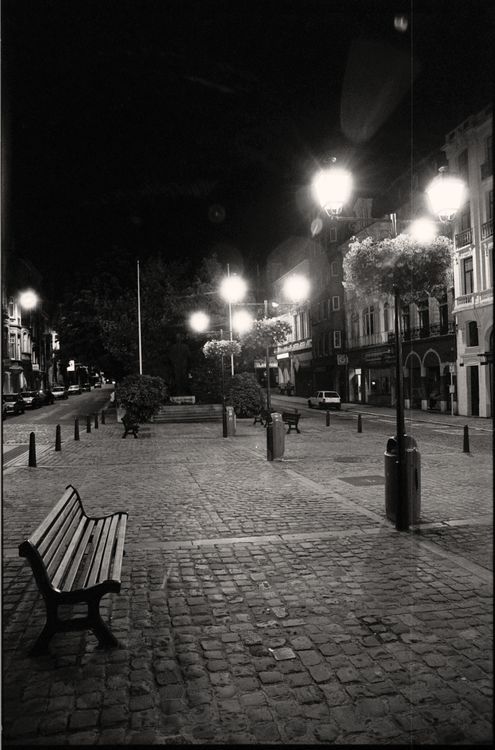
One last thing: go at night, at least once. The walls are illuminated after dark, the restaurants spill candlelight onto the cobblestones, and the view down to the marina — with the boats lit up and the water glittering — is something genuinely magical. This is the other side of Ibiza, and it's every bit as beautiful as the beaches and the sunsets.
Have you been to Dalt Vila? What's your favourite spot up there? Tell us in the comments below.